


.png)


paź
27,
2026
The traditional speedlight—though powerful and indispensable for wedding or event photography—can be quite a burden. Its large size, the need to ...


foto - tip | more than passion
paź
27,
2026
The traditional speedlight—though powerful and indispensable for wedding or event photography—can be quite a burden. Its large size, the need to ...
wrz
15,
2026
There are flash lights you buy for a single task. And then there are those that, over time, begin to play several different roles. Flash lights ...
lip
24,
2026
The launch of the DJI Osmo Pocket 4 opens up new possibilities for video creators. Discover how Irix Edge filters elevate the quality of your ...
cze
09,
2026
Godox V1 MID is a compact round-head TTL flash with HSS, USB-C battery charging and a 2.4 GHz wireless radio system. See who it is best suited for.
sty
13,
2026
Learn how to capture the emotion and speed of drift events: essential gear, lighting techniques and practical tips for creating powerful ...
gru
29,
2025
What is HSS and why does it allow flash photography with very fast shutter speeds? Learn why black bands appear in photos, how High Speed Sync ...
gru
17,
2025
Learn how to properly edit RAW files to bring out details, set a natural white balance, and give your photos consistent, fresh colours. Simple ...
gru
10,
2025
A Christmas photo session is a wonderful way to capture the magic of the holiday season. Discover how to create warm, natural and emotional photos ...
gru
05,
2025
Learn the essential principles of landscape composition. Discover how to use the rule of thirds, leading lines, natural frames and symmetry to ...
lis
28,
2025
Discover how to capture stunning photos during the golden and blue hours. Learn to plan light, use the best settings, and shoot in perfect natural ...
lis
03,
2025
Minimalism in landscape photography is about stripping the image down to its essence -using light, space and composition to create calm, powerful ...
paź
31,
2025
Shoot with intention - discover tools that help you plan the perfect outdoor session. This guide offers practical tips on maps, weather and ...
paź
30,
2025
Long exposure photography reveals motion in a magical way – from silky smooth water to clouds drifting across the sky. Learn step by step how to ...
paź
16,
2025
Landscape photography is more than just beautiful views. It is the art of capturing light, emotion, and the fleeting moments of nature. Discover ...
sie
11,
2025
Learn the safest ways to clean your camera’s sensor – and how to know when it’s time to let a professional handle the job.
lip
16,
2025
Award-winning, creator-approved – 11 standout products that combine innovation, reliability, and the joy of great photography.
maj
27,
2025
Dive into the captivating world of storm and lightning photography, where the right preparation and techniques will help you capture the majesty ...
maj
05,
2025
Discover the top 20 best-selling products of Q1 2025 – from lighting to accessories, here’s what photographers all over Europe loved most.
kwi
10,
2025
What happens when a macro lens meets the open landscape? The Irix 150mm f/2.8 brings a fresh perspective with reach, clarity, and compression.

Drift photography combines engine noise, the smell of burning rubber and a huge dose of adrenaline. It’s not just about taking pictures of fast cars – it’s about capturing emotion, dynamics and the unique atmosphere of motorsport events. My name is Dustin Bents and for several years I have been the official photographer for the largest drifting leagues in the country – DMP (Polish Drift Championship) and Drift Masters. In this article, I’ll show you how to prepare for drift photography, what equipment to choose and how to work on the track to create impressive, action-packed images.
The last few seasons have been some of my most successful ones. I travelled across Europe, taking part in numerous events and capturing unforgettable moments on race tracks. Below you’ll find the most important lessons I’ve learned.
Safety First
Drift is spectacular, but it also requires discipline and awareness. Before picking up your camera, make sure you understand the safety rules of the venue. Stay within the designated photographer zones, listen to marshals and staff, and remember: no photo is worth putting yourself at risk.
Understand the Event Structure
It’s helpful to know when practice runs, qualifying sessions and finals take place. This allows you to plan your position in advance and prepares you for close tandems, tight transitions and spectacular sideways action.

Think About the Shots You Want
Do you want tight, dynamic car shots, wide images capturing the event atmosphere, or portraits of drivers? A clear vision will help you choose the right lens, shooting position and overall approach.
The Camera – A Tool, Not the Goal
I currently use a Canon EOS 5D Mark IV, which performs excellently in demanding conditions. However, I previously worked with the much simpler Canon 1200D. This proves one thing: you don’t need top-tier gear to take great photos. Your camera is just a tool – the photographer makes the image.
Which Lens for Drift Photography?
Race tracks are large, open spaces. A telephoto lens is therefore essential. I personally use the well-known Canon EF 70–200 mm f/4L. Despite its age and the lack of image stabilisation, it still captures the most exciting moments reliably. The wide focal range gives me flexibility and allows me to shoot from various perspectives.
A telephoto zoom isn’t the only option, though. Prime lenses can also deliver excellent results, but they limit your framing flexibility. Sometimes it’s worth experimenting with a wide-angle lens like 24 mm, especially when you can safely get very close to the action. These shots are spectacular but require courage – as drifting cars often pass just a few metres away at speeds up to 220 km/h.
Accessories You Shouldn’t Forget
Drift events often run for 8–10 hours. During that time, I may take 2,000–3,000 photos in a single day. This puts enormous strain on the equipment. I always carry multiple spare batteries and fast, high-capacity memory cards. It’s also wise to split your images across several cards to reduce the risk of data loss. If conditions allow, I back up photos periodically onto a laptop or external drive.
Do You Always Need Additional Light?
Race tracks offer plenty of natural light, but it is not always enough to create strong, contrasty images. That’s why many photographers use portable flashes to highlight the vehicle’s shape, tyre smoke and fine details.
Which Lights Work Best?
On the track, I most frequently encounter lights such as the Quadralite Atlas 600 Pro and Godox AD1200 Pro. Their biggest strengths are portability, powerful batteries and reliability during long shoots.
How to Position Light on the Track?
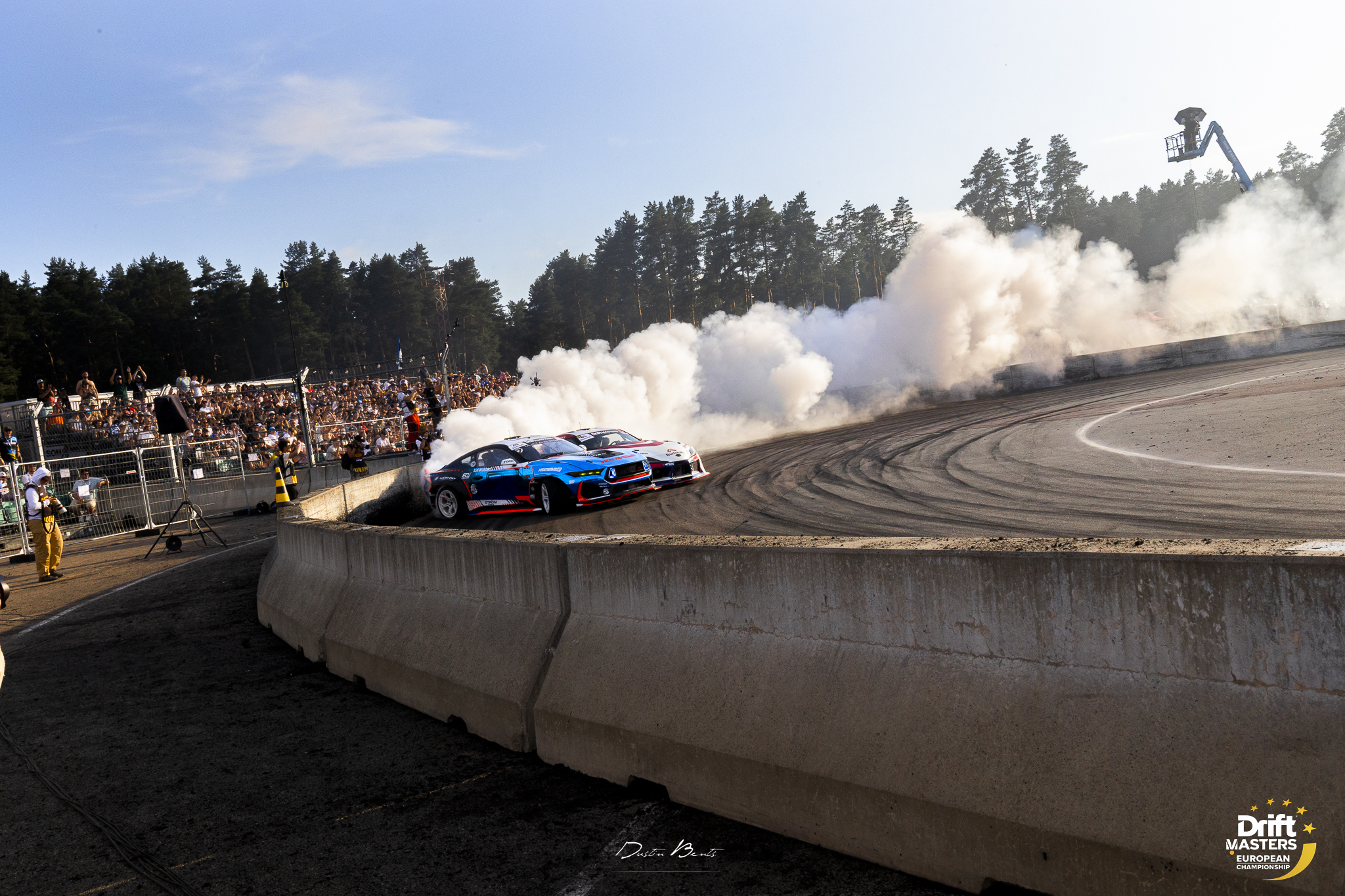
I often use two light sources – one positioned above the track to emphasise contours, and another aimed at the side of the car to add depth. Never aim a light directly toward the driver, as this can temporarily blind them and create dangerous situations.
Light Modifiers
For maximum flexibility, your lights should support Bowens or Elinchrom mounts. This allows the use of softboxes, reflectors and other modifiers. Godox modifiers offer outstanding quality for the price.
Freeze Motion or Show Speed?
Flash is excellent for freezing action, but I often shoot with shutter speeds of 1/320 s or slower. This allows the wheels, smoke and background to blur slightly, creating a realistic sense of speed.
Shooting From Unique Perspectives
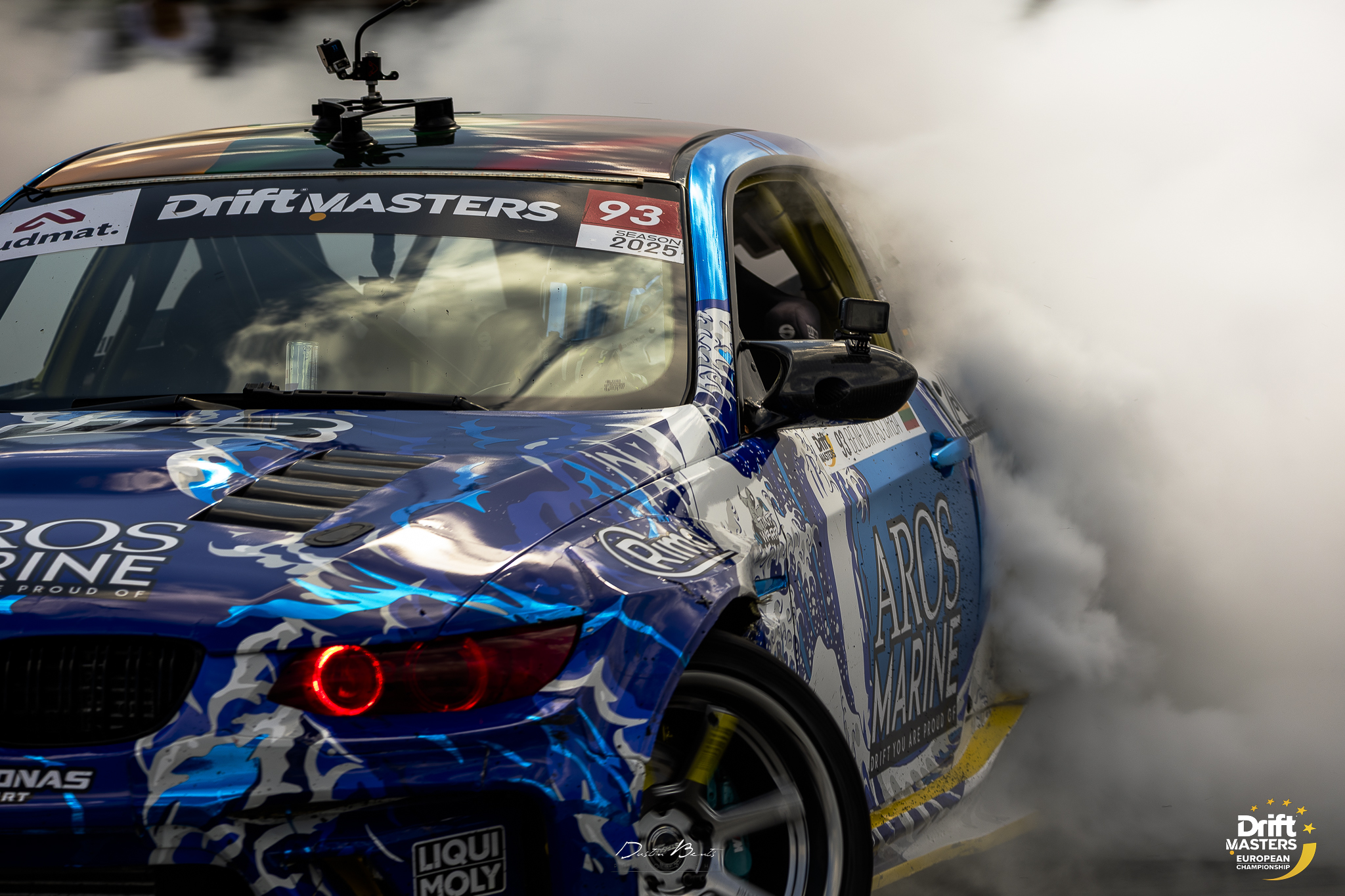
I often shoot from the trunk of a car driving ahead of the drifting vehicle. This provides dynamic front- or side-angle shots that stand out. Of course, this approach requires clear communication and extreme caution.
Why Automotive Photography Never Gets Boring
Each drift event has its own character, lighting conditions and challenges. That’s what makes this type of photography continually exciting and creatively stimulating.
If you want to develop your automotive photography skills, it’s worth investing in gear that will help you work more efficiently and achieve more professional results.
Drift photography combines passion for motorsport, quick reflexes and creativity. You don’t need the most expensive gear from the start – what matters most is understanding the track, knowing the event flow and being willing to experiment. Over time, you will develop your own style.
If you want to begin your journey into automotive photography, you will find the products mentioned in this article, as well as many other useful accessories, at foto-tip.com. If you have any questions, we are always happy to help.
Do you have your own tricks or creative ideas for drift photography? Share them in the comments – I’d love to hear them!


Comments : 0